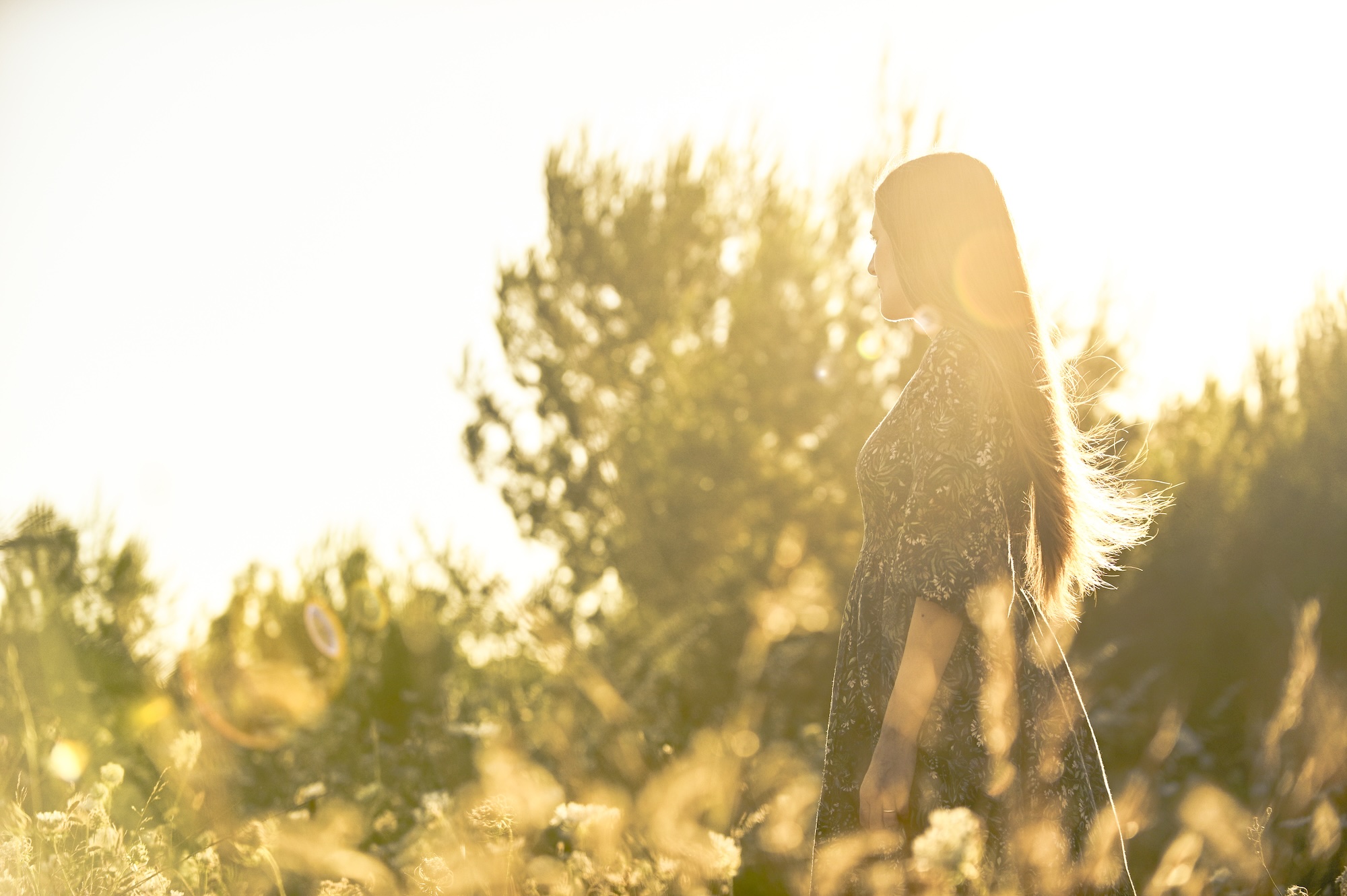
My artistic research is rooted in an instinctive connection with the world of textiles, in which I recognise a language capable of preserving memory and giving new voice to knowledge passed down through generations. Sardinia’s oral traditions, is contus told by elders, and the ancient tales of the Janas have always nourished my imagination, fostering a sense of belonging to a cultural heritage that continues to live through those who embrace its legacy and preserve its meaning.
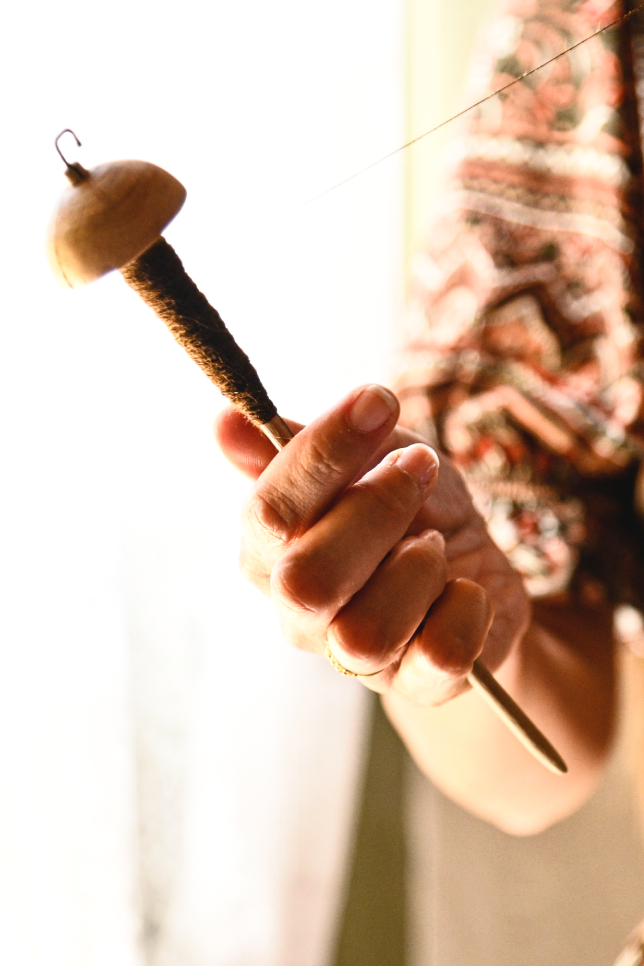
My interest in textiles began at an early age, through observing everyday gestures and discovering the knowledge passed down within families, often without words, through the hands and the quiet repetition of traditional practices. In weaving, I have found a form of expression that allows me to explore materials and interpret, through my own sensitivity, a heritage in which personal history intertwines with collective memory.
Through thread and fabric, I seek to give form both to what the past has preserved and to the images and impressions that emerge from my imagination. It is within this ongoing dialogue between what I have inherited and what I wish to express that my artistic research finds its own voice, with the understanding that every body of knowledge holds unexplored possibilities through which it can renew itself without losing its connection to its origins.
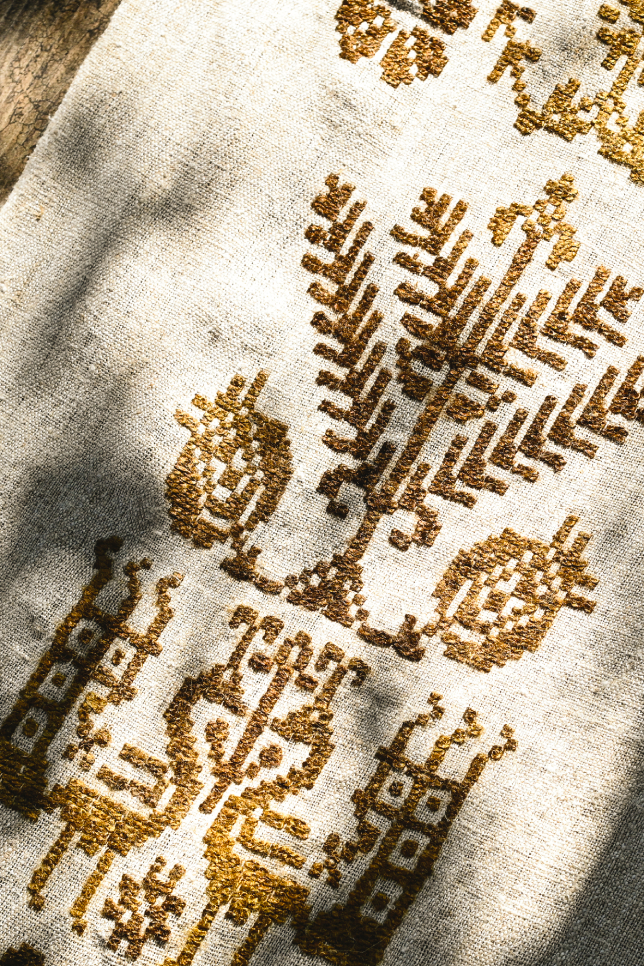
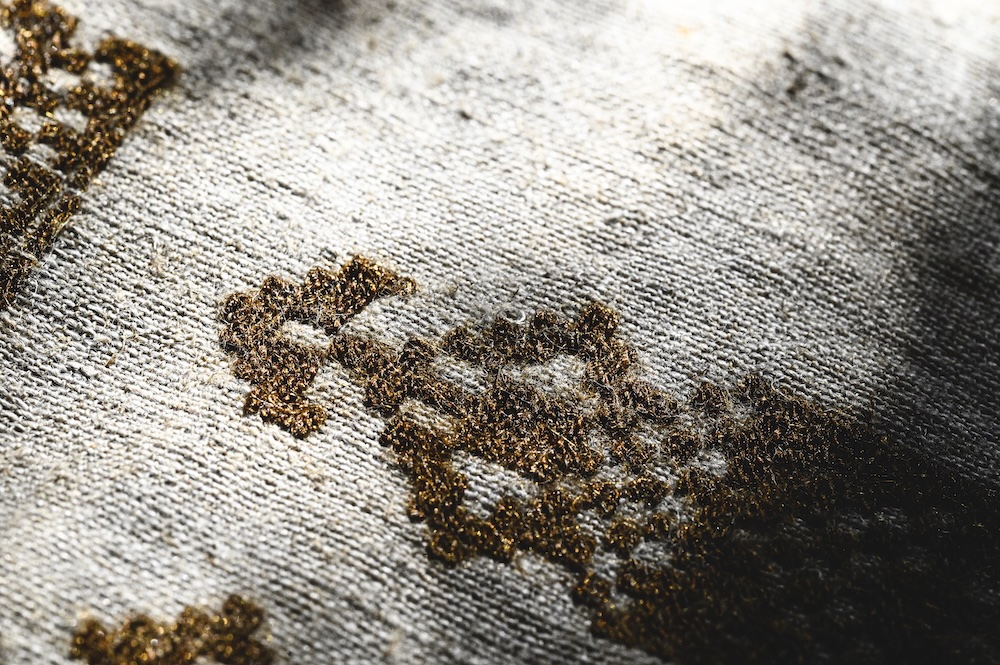
For many years, I have devoted my research to the study and transmission of ancient textile knowledge, following the traces of practices entrusted to human memory and the continuity of gestures passed down through generations. Among the materials that accompany my journey, sea silk holds a special place, both for the uniqueness of its golden filaments and for its deep connection with Sant’Antioco, where the tradition of working with this fibre has endured across generations.
My first encounter with sea silk dates back to 2007, when I began exploring the textile traditions of the Sulcis region, eager to gain a deeper understanding of the history of my female ancestors’ homeland. This journey led me to Sant’Antioco, where I had the opportunity to learn the traditional techniques used to process this fibre. Since then, I have continued to refine and deepen my knowledge through hands-on practice, the study of historical sources, and listening to oral testimonies.
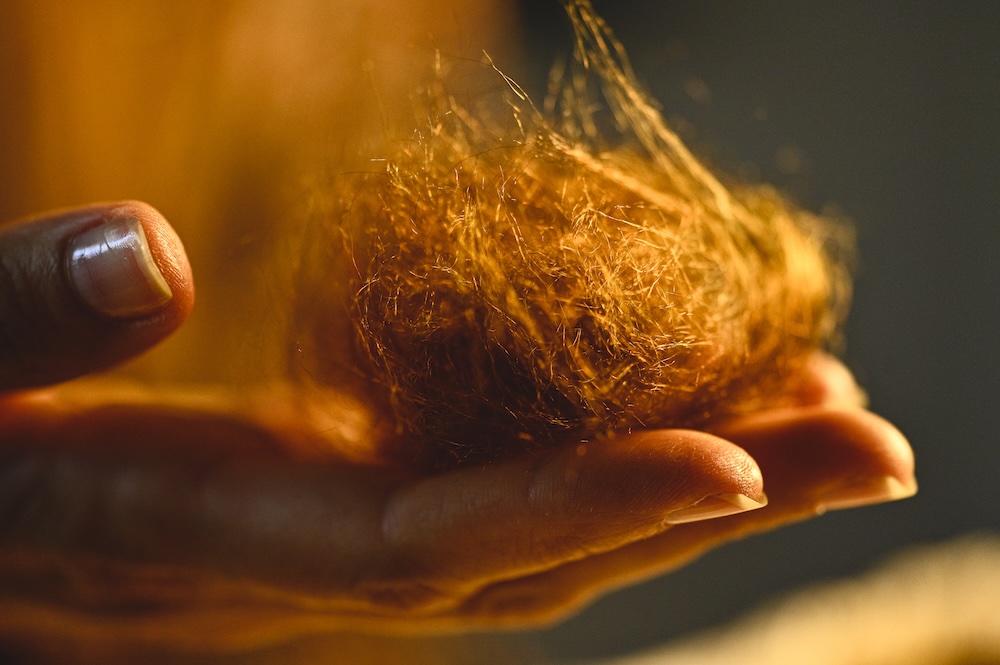
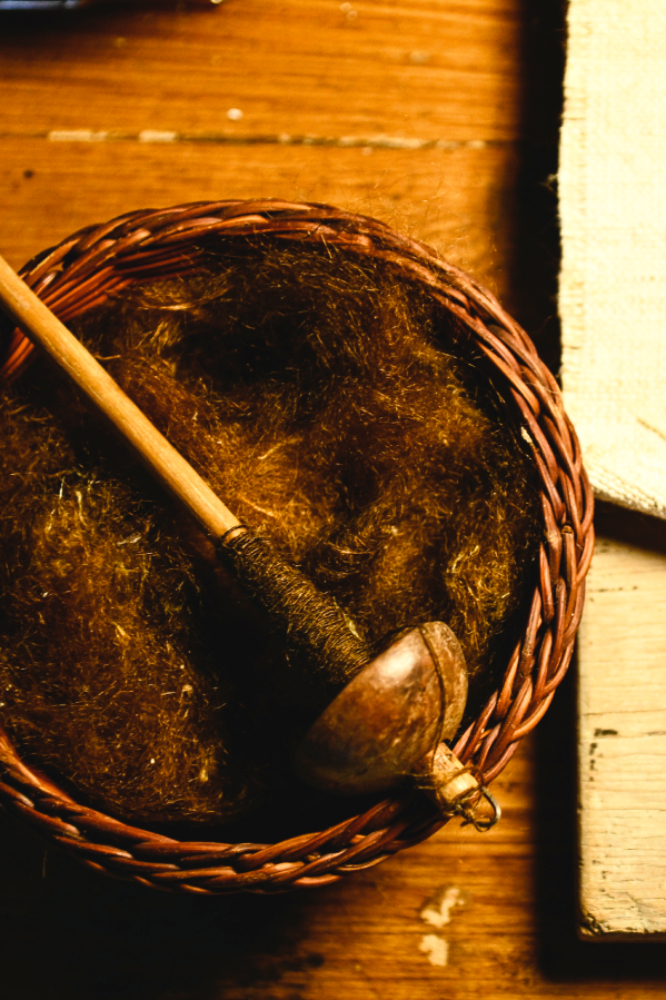
The protection of Pinna nobilis, an endangered and legally protected Mediterranean mollusc, led me to explore alternative ways of continuing my research while respecting the environment and existing legislation. In 2017, by sourcing filaments from Atrina pectinata, an oceanic species distinct from Pinna nobilis, I was able to resume working with sea silk, undertaking the delicate stages that transform raw tufts of fibre into fine golden filaments ready for spinning and weaving.
This experience has reinforced a conviction that guides my work: preserving a tradition also means taking responsibility for the choices necessary to ensure its continuity, seeking a balance between safeguarding memory and protecting the natural world.
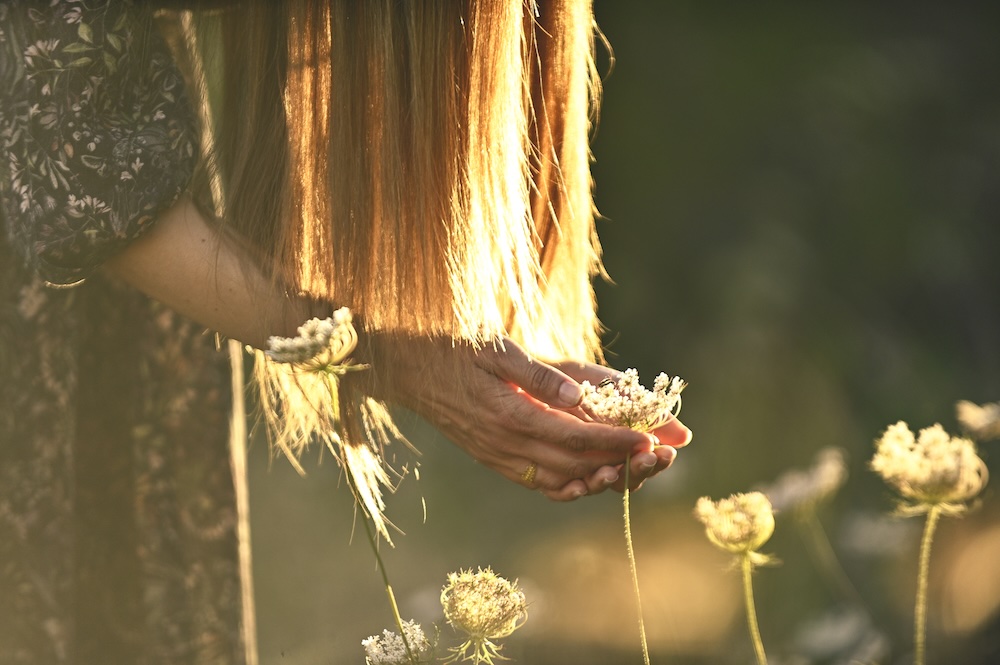
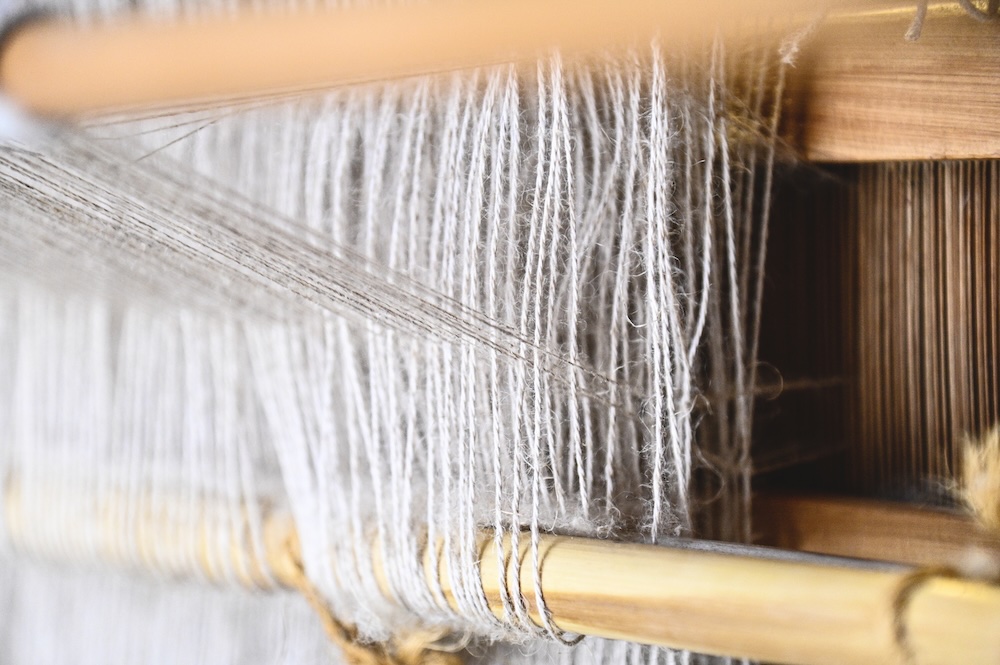
Alongside my work with sea silk, since 2012 I have been cultivating and processing flax, personally overseeing its entire cycle, from sowing to spinning. Here, too, oral testimonies and traditional techniques represent an invaluable heritage, allowing me to deepen my understanding of practices that have become increasingly rare and to rediscover, through direct experience, a deeper connection with the land and its natural rhythms.
My practice intertwines historical research, hands-on experience, and the transmission of knowledge, guided by an awareness of the cultural and environmental value of natural fibres. Through my work with sea silk in particular, I seek to contribute to the continuity of an ancient tradition, deepening my understanding of the material and its transformations, while remaining mindful of the importance of respecting nature and the responsibility inherent in every gesture.

Weaving is the language through which I give form to my imagination, entrusting thread with the task of expressing what takes shape in my mind. Natural fibres, chosen for their distinctive characteristics, become the words of a narrative woven through the knowledge of traditional techniques and the exploration of new expressive possibilities. Each fabric emerges from this encounter, in which the nature of the yarn and the structure of the weave create an expressive language that manifests itself in form and reveals itself through touch.
Textile surfaces evolve through contrasts of density and transparency, through irregularities in the weave and subtle variations in colour that emerge throughout the making process. Like words, threads take on different meanings depending on how they are brought together, giving rise to forms capable of evoking presences and suggesting images. The distinctive qualities of the fibres and the traces left by the hands contribute to this narrative, giving each variation a meaning that enriches the harmony of the whole.
For me, the choice of materials carries a meaning that extends beyond their technical and aesthetic qualities. Each fibre has a character of its own, which I seek to understand and respect, allowing myself to be guided by the possibilities it offers.
Weaving thus becomes a space where my imagination meets the stories that thread can tell. Forms and patterns come to life through a process in which thought enters into dialogue with the work of the hands. Each piece may find its own expression, yet it retains the care I devote to the weave and the value I place on every gesture. Like the words of a story, threads find within the weave a meaning that transcends their individual existence, giving shape to a narrative that each of them helps to tell.
Nestled among the houses of an ancient medau, a traditional rural settlement in the countryside of San Giovanni Suergiu, in southern Sardinia, lies my weaving atelier. An intimate space rooted in the memory of this land, where I devote myself to textile research and the exploration of knowledge that has endured through time through the work of the hands.
From time to time, I open the doors of my atelier to those who wish to discover the world of fibres and ancient processing techniques more closely. Through storytelling and the observation of traditional gestures, I share my research journey, focusing particularly on sea silk and flax, their different origins and the knowledge that accompanies their transformation.
Each visit is conceived as a personal encounter, reserved for a small number of people, allowing time for observation and understanding. Visitors are invited to explore the fibres up close, while the tools and gestures gradually reveal their history. It is an opportunity to reflect on the cultural value of these practices and the responsibility of passing them on, with respect for the environment and for a heritage of knowledge that deserves to be preserved.
Visits take place exclusively by appointment, on a limited number of dates, so that each encounter may retain its intimate character and the quality of the time shared. Arrangements are agreed upon at the time of enquiry.
Visits are intended for individuals and cultural organisations wishing to explore textile heritage, discover the stories held within the fibres, and understand the deep connection between traditional knowledge and the land from which it originates. Each encounter arises from a desire to share my research journey and offer a space for reflection on the value of memory and the responsibility of passing it on, so that the knowledge of the past may continue to find expression in the present.
The atelier also welcomes museums, institutions and professionals interested in gaining a deeper understanding of my artistic practice and exploring opportunities for collaboration through research projects and commissions that recognise the cultural value of textile work.